
 he first half of my gap year went to mathematics. I did a residential mathematics apprenticeship under Professor Shanta Laishram, Head of the Theoretical Statistics and Mathematics Unit (Stat-Math Unit) at the Indian Statistical Institute (ISI), Delhi, working in advanced number theory, hosted at Ashoka University. I received a 10,000 INR research stipend, and all in all, it was one of the most fulfilling summers of my life!
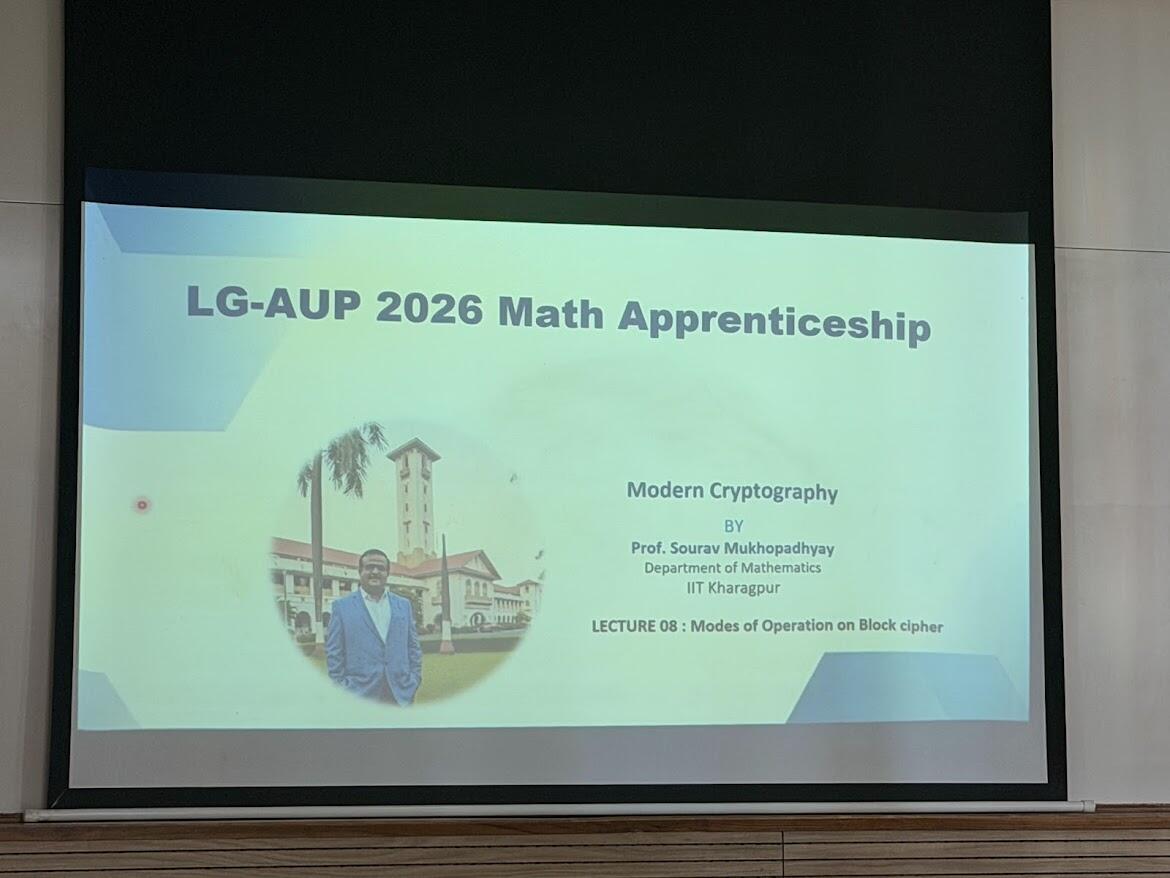
A lecture on modern cryptography, from the mathematics apprenticeship.
I was also a Teaching Assistant to the Lodha Genius Programme 2026, an undergraduate teaching position that the programme made an exception to include me in. Over four weeks, housed at Ashoka University, I worked across four completely different courses: the Mathematics of Investing, Rubik's Cube and Group Theory, Basic but Essential Mechanics, and Origami and Advanced Geometry.
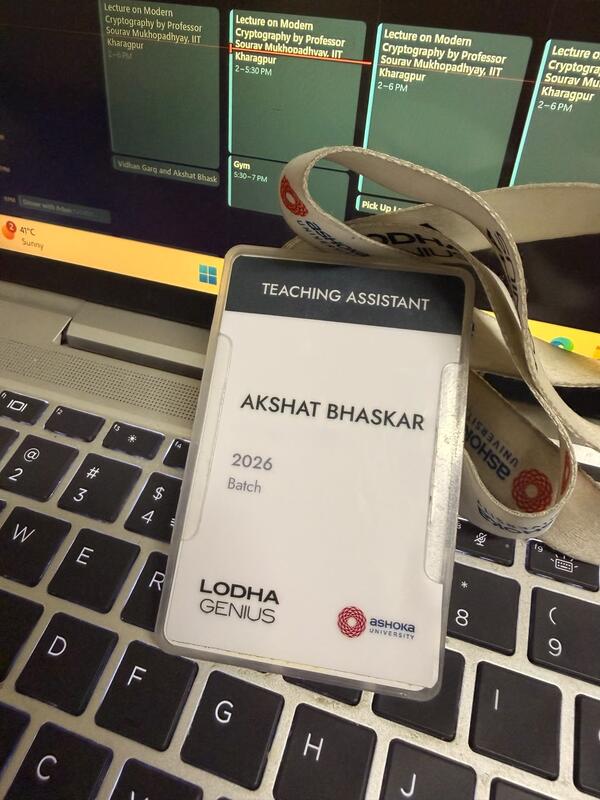
My Teaching Assistant ID card, Lodha Genius Programme.
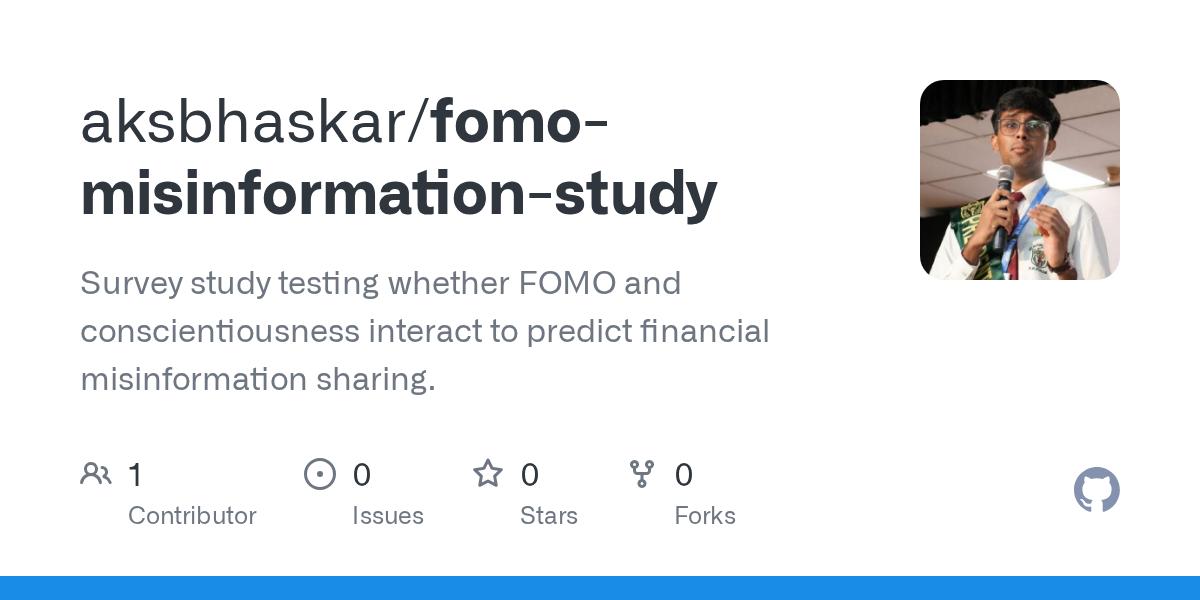
Then, for the latter part of my gap year, I worked on a completely different question. Throughout my work in financial literacy, I had assumed ignorance was the disease and information the cure. I am still running Edunomix and Decoded, but I had started to see that literacy is only one part of the story. So once I landed back in Delhi from Ashoka, I began exploring that full time: under the guidance of Professor Hemant Kakkar at the Indian School of Business, I am now studying how financial misinformation spreads across Indian social media, using language models built for Indian languages (MuRIL and XLM-RoBERTa), paired with validated psychological instruments to work out not just which posts are false, but who is most likely to pass them on. Check out the GitHub here! I am still in the middle of this study. The data collection phase is now complete, with 300 responses collected, and I am moving on to the analysis and the NLP component of the study :)
I also kept running Edunomix day to day and launched the second edition of our nationwide essay competition, judged by economics scholars from Harvard, UC Berkeley, Cornell, and Warwick. We ran the Ukraine Speaks English seminars again this season with Learn and Teach UA, free financial education for students across Ukraine.
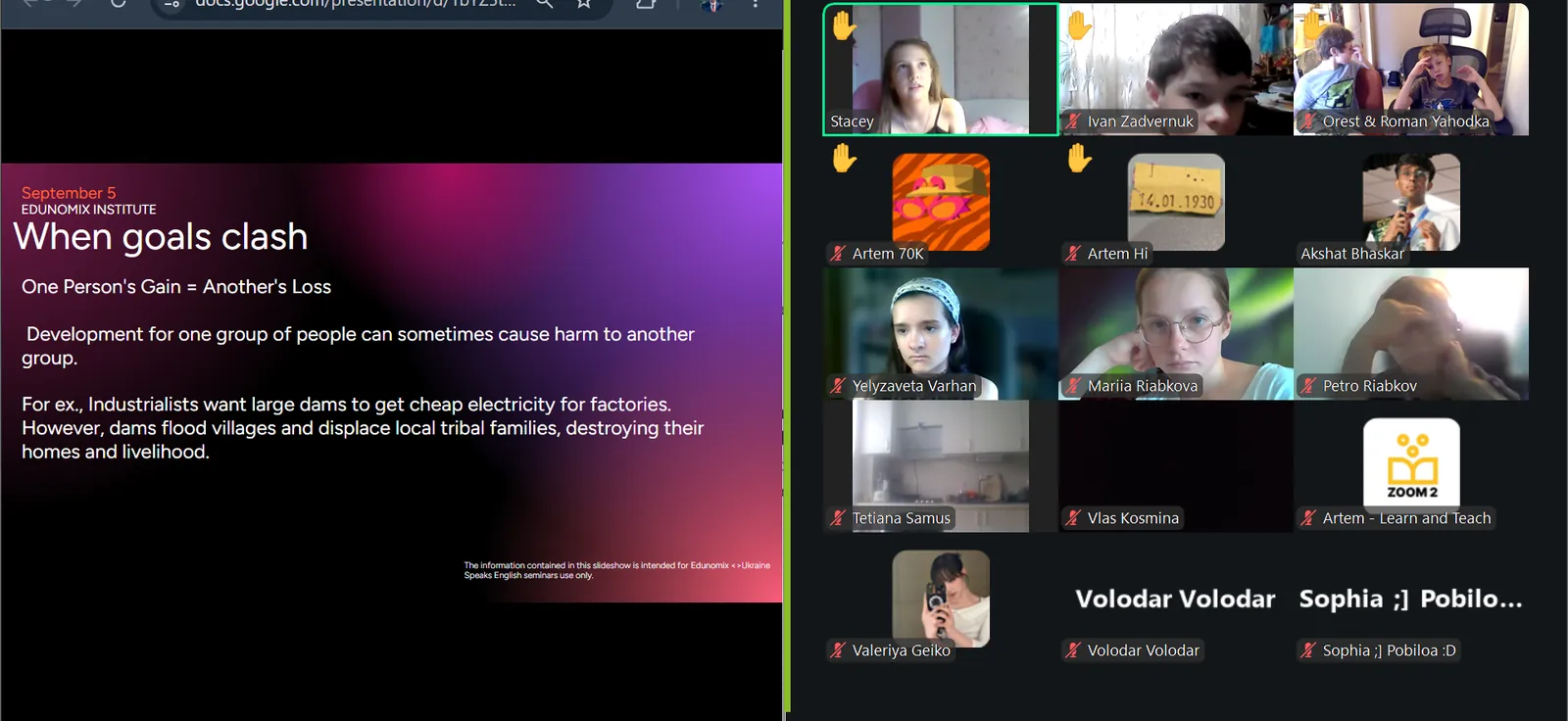
Fall 2026 Ukraine seminars, our first session.
And I expanded the Decoded team out from just Amaira and me into a broader operation, with more than 20 volunteers across research, social media, and outreach, and worked on a collaboration with HERizon on various events. We interviewed a lot of experts in 2026, breaking down their fields for the general public, some of which include:
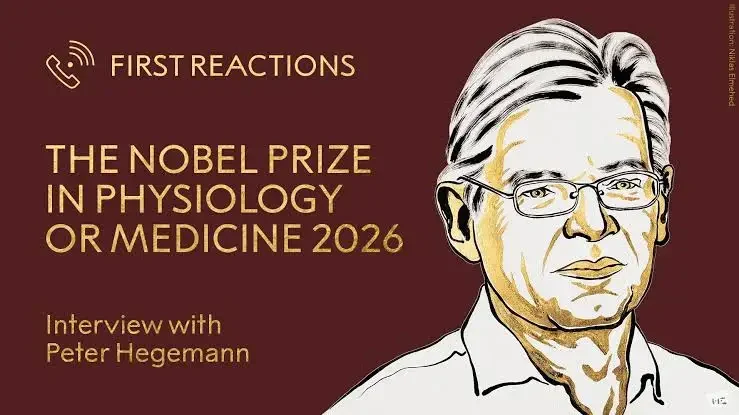
Peter Hegemann, 2026 Nobel laureate in Physiology or Medicine. Illustration: Niklas Elmehed, Nobel Prize Outreach.
- Peter Hegemann, 2026 Nobel Prize in Physiology or Medicine, Professor @ Humboldt University of Berlin (Date: Next Week)
- Ram Sewak Sharma, CEO @ National Health Authority and the Innovator @ Aadhar Card (Uploading Soon)
- Ashok Kantha, Former Ambassador of India to the People’s Republic of China (Uploading Soon)
- M. Ram Murty, FRSC: Canadian Mathematician, Queen's Research Chair in Mathematics @ Queen's University (Spotify Link)
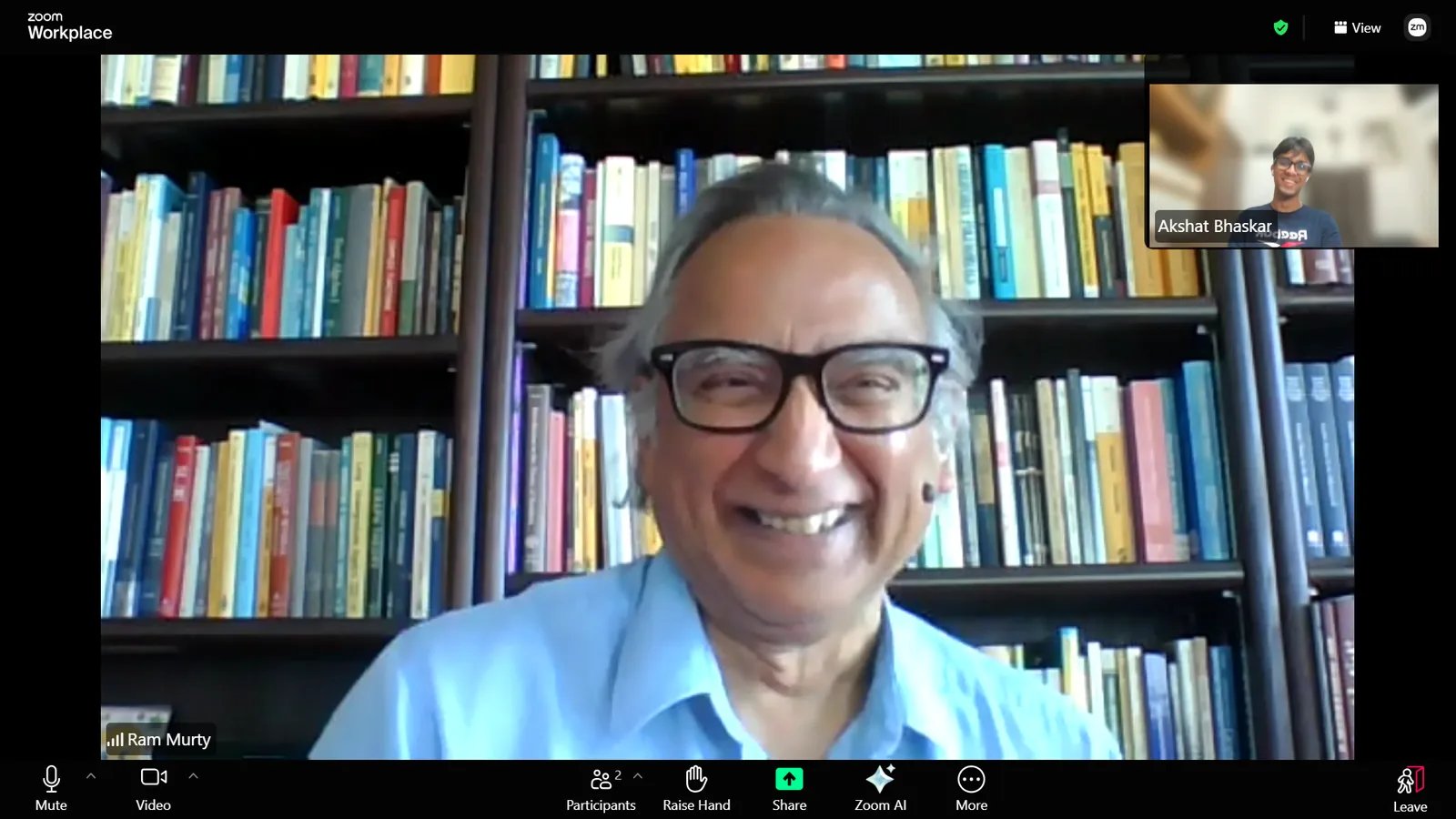
On a call with M. Ram Murty.
- Cary S. Krosinsky: Lecturer @ NYU Stern, Harvard, Yale, and Co-Founder & Director @ Sustainable Finance Institute (Spotify Link)
- Eduard Talamàs, Professor @ IESE Business School and PhD @ Harvard University (Uploading Soon)
- Sandeep Juneja: Professor @ Ashoka University, Director @ Safexpress Centre for Data, Learning and Decision Sciences at Ashoka University (Spotify Link)
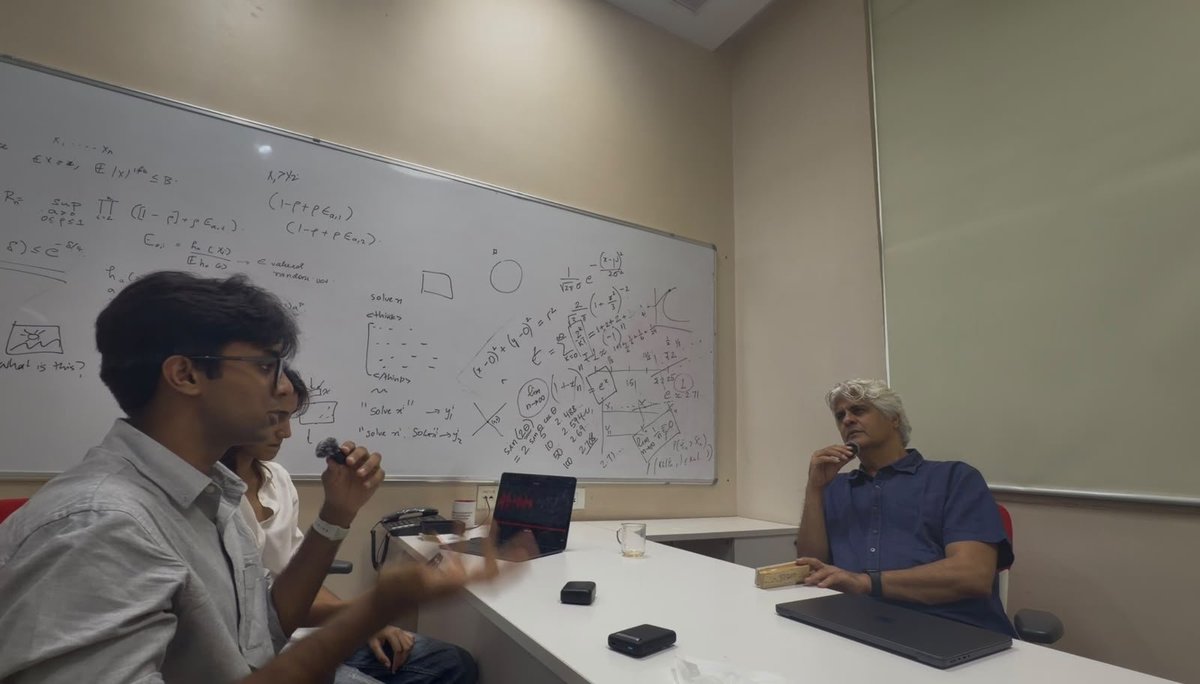
Interviewing Professor Sandeep Juneja for the Decoded Podcast.
- Sundar Sarukkai, World Famous Philosopher (Uploading Soon)
- Dr Mahendra Kumar Singh, Professor Ph.D., Assistant Professor @ DDU Gorakhpur University (Date: 9th October)
among many others!
Away from all of this, I visited the Andaman and Nicobar Islands for 15 days with my family, and got to spend a lot more time with my extended family as well, which is hard to do when the rest of the year is this full. A few frames from the islands are on my photography page.
I also took part in a lot of competitions, organised quite a few things, and learned a ton along the way, while going deeper into my work in AI. From 30 October to 1 November 2026, I will be at ConfAI 2026 at Plaksha University, where I have been invited to the AI conference in line with my work on AI Policy!
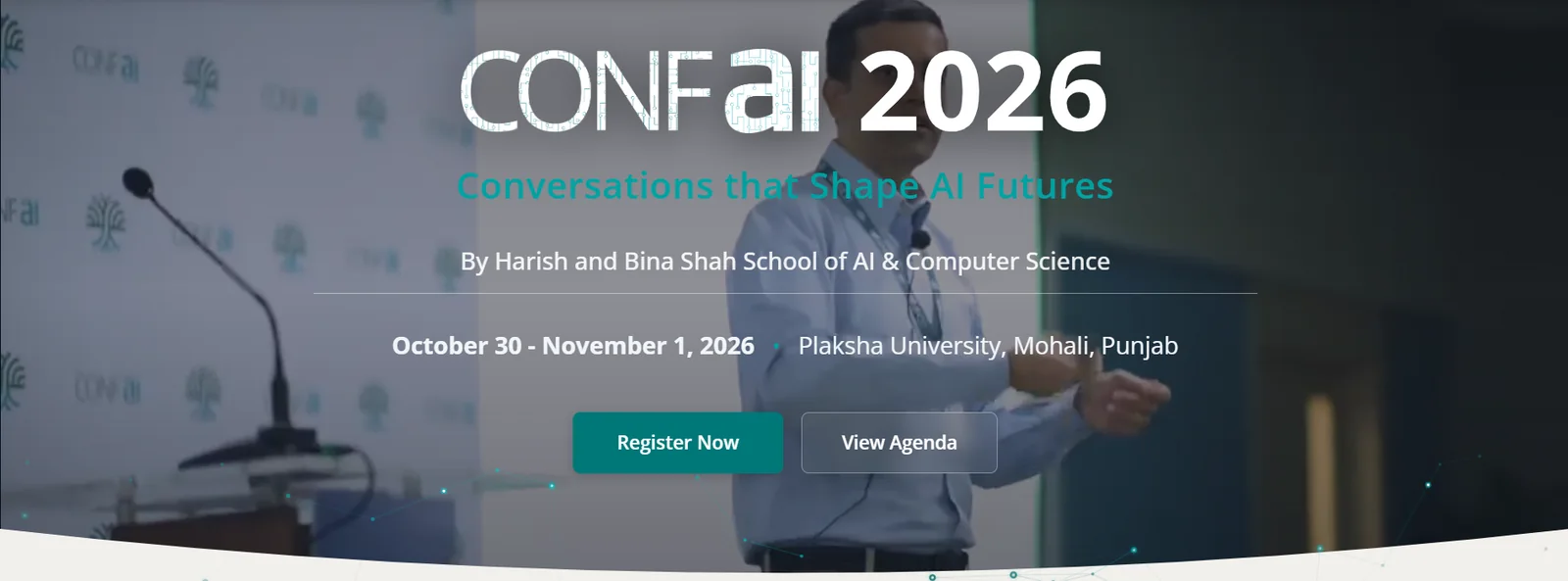
ConfAI 2026, Plaksha University.
Since then, a few things have moved. I closed the survey for the financial misinformation study at 311 eligible responses, and am now running the main analysis. We closed entries for the second Edunomix India Essay Competition, with hundreds of entries from over 24 states, and will announce the results by 1st November. And Decoded is getting its first Nobel laureate: we’ll be interviewing Peter Hegemann, who shared the 2026 Nobel Prize in Physiology or Medicine, next week!
On the side, I have been building a few things to pick up the technical skills I want for economics research at university: Forge, an AI research lab built at Hack-Nation’s 7th Global AI Hackathon (October 2026); Scout, a voice agent that calls vendors and negotiates on verified leverage (August 2026); Project Fermat, teaching olympiad mathematics in underserved schools across Delhi NCR (September 2026); and a Sensitivity Model for Multi-Credit Calibration with two friends (October 2026). In October I also started learning linear algebra, through YouTube and MIT OpenCourseWare, and advanced Python.